top of page
970x250-IAC.jpg
970x250.png
970x250-Rightmove.jpg
Template for national news
No Writer
Dec 1
UK special forces unit had 'deliberate policy' to 'kill fighting-aged males' in Afghanistan

In a note dated 7 April 2011, a senior officer warned the director of UK special forces about the policy, sharing concerns from the unit's commanding officer. But the senior officer, codenamed N1466, said a "conscious decision" was made to cover up potential war crimes by the unit, dubbed UKSF1. The document was released by the Afghanistan Inquiry after evidence was given in closed hearings by UK special forces members. In the note, N1466 – who was assistant chief of staff for operations in UKSF headquarters – described what he'd heard from the unit's commanding officer. "He felt that this was... possibly a deliberate policy among the current (sub-unit) to engage and kill fighting-aged males on target even when they did not pose a threat," the note read. "He had been approached by some of his men who recounted separate conversations with (trained) members of UKSF1 in which such suggestions had been made." The note explained that the unit's commanding officer "is sure that they are accurately reporting what they are hearing from colleagues". And while N1466 conceded that the allegation could be simply a "rumour" or a "wind up", he said "the context would not support either assertion". He continued: "The very fact that this rumour is circulating is in itself distasteful and in my view unacceptable to UKSF ethos and UKSF dynamics - it could prove explosive. "Clearly, if there is anything more than rumour behind it then elements of UKSF have strayed into indefensible ethical and legal behaviour." He concluded: "My instinct is that this merits deeper investigation." However, the director, known to the inquiry as N1802, made a "conscious decision" to cover up potential war crimes, N1466 claimed. The senior officer further accused the director of controlling information about alleged murders "in a way that I think indicated a desire to keep it low profile". N1466 said he became concerned that data from deliberate detention operations (DDOs), including the number of weapons found compared with the number of enemies killed, "didn't seem credible". Read more:Ex-police chief condemns Afghanistan 'war crimes' probeEx-veterans minister gives Afghan killings inquiry 'further information.' The director shared his view, he believed, but chose to handle the information in a "way which limited the spread of the damage outside the headquarters". N1802 failed to "ever talk about possible criminal activity", the officer alleged, instead initiating a review of the tactics, techniques and procedures (TTPs) used by the sub-unit in question in April 2011. In his witness statement, the officer recalled feeling that the TTP review was intended as a "warning shot across the bows" of the unit. But, he said, "it was obvious that it was a charade". "I was sure at the time and I remain sure that N1802 knew what was happening on the ground," he said. "The speed of N1802's response and the absence of any further mention or investigation of unlawful activity only fortified my belief that he was aware of what was going on." Among the documents released by the inquiry was a summary of an interview between N1466 and the Royal Military Police (RMP) in October 2018. During the exchange, the officer described an incident where members of UKSF1 went to clear a compound and found a room where people were hiding under a mosquito net. The document read: "They did not reveal themselves, so the UKSF1 shot at the net until there was no movement. "When the net was uncovered it was women and children. "The incident was covered up and the individual who did the shooting was allegedly given some form of award to make it look legitimate." N1466 also told the inquiry why he was speaking out, saying "it's not loyalty to your organisation to stand by and to watch it go down a sewer". In his remarks, he referred to the alleged 2012 shooting of two children – Imran and Bilal, sons of Hussain Uzbakzai and his wife Ruqquia Haleem – who were in their beds. He said: "I know a lot of my colleagues... didn't join UKSF for this sort of behaviour, you know, toddlers to get shot in their beds or random killing. "It's not special, it's not elite, it's not what we stand for and most of us I don't believe would either wish to condone it or to cover it up." He added: "Even if you subscribe to some sort of idea that most of the people who were killed were Taliban fighters, which I do not... Imran and Bilal, at one-and-a-half and three, certainly were not." Concluding, he said: "UKSF units, not least UKSF1, stand out for their proud history; the courageous and extraordinary feats made by truly remarkable people. "The activity that we have discussed in the last few days does not fit with that and somehow the amount of kills and the amount of trigger time have become the metric by which people judge themselves." Afghan families claim UKSF conducted a "campaign of murder" against civilians, and that senior officers and personnel at the Ministry of Defence (MoD) "sought to prevent adequate investigation". Operation Northmoor, a £10m investigation set up in 2014 to examine allegations of executions by special forces, including those of children, resulted in no prosecutions. A RMP investigation, dubbed Operation Cestro, resulted in three soldiers being referred to the Service Prosecuting Authority, but again, none of them were prosecuted. An MoD spokesperson said: "The government is fully committed to supporting the independent inquiry relating to Afghanistan as it continues its work, and we are hugely grateful to all former and current defence employees who have so far given evidence. "We also remain committed to providing the support that our special forces deserve, whilst maintaining the transparency and accountability that the British people rightly expect from their armed forces. "It is appropriate that we await the outcome of the inquiry's work before commenting further." The inquiry continues.

Template for national news
No Writer
Nov 30
British Independent Film Awards winners revealed

The film's first-time feature writer and director Harry Lighton was also named best debut screenwriter at the ceremony, held at the Roundhouse in Camden, London, on Sunday evening. Starring Harry Melling as sweet and timid Colin, and Alexander Skarsgard as rugged biker Ray, the film picked up four prizes in total - including craft wins for best costume design and make-up and hair. Tom Basden and Tim Key took home the BIFA awards for best joint lead performance and best screenplay, for their debut feature The Ballad Of Wallis Island. Also starring Carey Mulligan, the film tells the story of a faded folk musician and his former partner who reluctantly reunite for an eccentric fan. Elsewhere in the acting categories, Robert Aramayo was honoured with the best lead performance award for his portrayal of Tourette's campaigner John Davison in I Swear, with the supporting performance award going to Jay Lycurgo for his role in pressure-cooker school drama Steve, also starring Oscar-winner Cillian Murphy. Newcomer Posy Sterling's portrayal of a mother fighting for custody of her children in Lollipop earned her the breakthrough performance award, while the best ensemble performance prize went to the cast of Warfare - including Will Poulter, Kit Connor, Joseph Quinn and Charles Melton. This year's ceremony also celebrated cinema itself, with the inaugural cinema of the year award going to The Magic Lantern Cinema in the Welsh coastal town of Tywyn. The BIFA for best international independent film was awarded to Sentimental Value, Joachim Trier's intimate exploration of family, memories and the reconciliatory power of art. Behind the camera, Akinola Davies Jr was named best director for his debut feature My Father's Shadow, a story of two brothers who first come to understand their father at a pivotal moment in both his life and Nigerian history, while The Douglas Hickox Award for best debut director went to Cal McMau for prison drama Wasteman. And in the documentary categories, Myrid Carten's exploration of mental health and addiction within her family, A Want In Her, picked up three BIFAs - best feature documentary, The Raindance Maverick Award, and best debut director for a feature documentary. Elsewhere, Emily Watson, star of films including Gosford Park, Punch-Drunk Love and War Horse, and TV series including Chernobyl and Dune: Prophecy, was awarded the outstanding contribution to British film prize. Production company Warp Films - behind films such as Dead Man's Shoes and This Is England, as well as the recent critically acclaimed series Adolescence - was honoured with the BIFA special jury prize for its "unflinching and uncompromising" commitment to telling "raw and relevant stories". Read more from Sky News entertainment:King pays tribute following death of Tom StoppardAI actress creator insists she's not out to steal jobs Founded in 1998, the BIFAs aim to celebrate, promote and support talent and creativity in British independent film. Previous winners of the best independent film award include Kneecap, the semi-autobiographical story of Irish-language rappers Kneecap, and Oscar winner The Favourite. This year's ceremony was hosted by comedians Lou Sanders and Harriet Kemsley, with Carey Mulligan, Stephen Merchant, Ruth Wilson, Billy Crudup and Celia Imrie among the star presenters.

Template for national news
No Writer
Nov 30
'Of course I didn't' lie about budget forecasts, chancellor tells Sky News - as Badenoch calls for her to resign

Rachel Reeves is facing widespread accusations that in a speech from Downing Street on 4 November in which she laid the groundwork for tax rises, she misled the country and led the public to believe the fiscal situation was worse than it actually was. Asked directly by Sky's Trevor Phillips if she lied, she said: "Of course I didn't." Follow the latest updates from Westminster Ms Reeves said the decision by the independent Office for Budget Responsibility (OBR) to review and downgrade productivity meant the forecast for tax receipts was £16bn lower than expected. As a result, she said she needed tax rises to create more fiscal headroom (the amount by which government can increase spending or cut taxes without breaking its own fiscal rules) to reassure the financial markets and create stability in the economy. But the OBR has said it told the chancellor in its forecast on 31 October that there was a £4.2bn budget surplus, rather than a black hole following the productivity downgrade, and Trevor challenged her on why she did not say that to the nation and argue that more headroom was needed. She replied: "I said in that speech that I wanted to achieve three things in the budget - tackling the cost of living, which is why I took £150 off of energy bills and froze prescription charges and rail fares. "I wanted to continue to cut NHS waiting lists, which is why I protected NHS spending. And I wanted to bring the debt and the borrowing down, which is one of the reasons why I increased the headroom. "£4bn of headroom would not have been enough, and it would not give the Bank of England space to continue to cut interest rates." Ms Reeves also said: "In the context of a downgrade in our productivity, which cost £16bn, I needed to increase taxes, and I was honest and frank about that in the speech that I gave at the beginning of November." She confirmed that the prime minister was aware of the fiscal forecasts and what she was going to say in her speech on 4 November about the challenges facing the UK economy, saying: "Keir [Starmer] and myself met regularly to discuss the budget and the choices, because these are the choices of this government. "And I'm really proud of the choices that we made - to cut waiting lists, to cut inflation, and to build up that resilience in our economy." Tax rises 'not on scale of last year' Following her budget last year, in which she raised taxes, the chancellor was explicit to Trevor that she would "never need to do that again" or "come back for more". But Ms Reeves did raise taxes by freezing income tax thresholds until 2031, and implementing a range of smaller tax rises totalling £26bn, so Trevor put to her that what she said last year was not true. She replied: "The budget this year was not on the scale of the one last year, but as I set out in my speech at the beginning of November, the context for this budget did change and I did have to ask people to contribute more." 👉 Listen to Sky News Daily on your podcast app 👈 She conceded that it is "true" that she said she wouldn't have to raise taxes, and has now done so, but said it was "for reasons not in my control", pointing to the OBR's decision to conduct a productivity review. But Conservative leader Kemi Badenoch hit out at the chancellor's handling of the economy, telling Trevor: "I think the chancellor has been doing a terrible job. She's made a mess of the economy, and [...] she has told lies. This is a woman who, in my view, should be resigning." 'I am choosing children' Ms Reeves also told Trevor that she is "proud to be the chancellor that lifts half a million kids out of poverty" through her decision to lift the two-child cap on benefits from April, which was brought in by the Conservatives in 2017 and meant parents could only claim universal credit or tax credits for their first two children. Trevor put to her polling that shows that while 84% of Labour members are in favour of scrapping the cap, just 37% of those who voted Labour in 2024 think it should be scrapped. And asked if she is choosing party over country, the chancellor replied: "I am choosing children, Trevor. This lifts more than half a million children out of poverty, combined with our changes on free breakfast clubs, extending free school meals, 30 hours [of] free childcare for working parents of pre-school age children. "You can put up those percentages, but the people I was thinking about were kids who I know in my constituency, who go to school hungry and go to bed in cold and damp homes. And from April next year, those parents will have a bit more support to help their kids." Liberal Democrat deputy leader Daisy Cooper told Trevor that her party backs the decision, saying: " First of all, we think it is morally the right thing to do. And secondly, because it saves money for the taxpayer in the longer term, because we know that children growing up in poverty end up costing the taxpayer more because they have worse health outcomes, worse educational outcomes as well." But she added that they are "deeply concerned" about "this double whammy stealth tax on both households and on high streets". 'We need growth in our economy' But the Tory leader hit out at the decision, telling Trevor that lifting the two-child benefit cap is "not the way" to lift children out of poverty, and saying that it means the government is "taxing a lot of people who are struggling to pay for those on benefits". Ms Badenoch said: "About half a million families are going to be getting an uptick of about £5,000. Many other people don't have £5,000 lying around. "We believe that people on benefits should have to make the same decisions about having children as everybody else. And remember, we're not talking about child benefits here. We're talking about the universal credit element of it. You get child benefit for as many children as you have. "But at some point, someone needs to draw a line somewhere." Read more:Lammy says justice reforms will reduce victims' sufferingReeves accused of imposing 'stealth tax' on hospitality Ms Badenoch argued that the way to ensure children are not in poverty is to "make sure that their parents have jobs and that those jobs pay well", and said the level of unemployment has increased "every single month" since Labour came to office in July 2024. "What we need is growth in our economy. Simply taking out from people who are struggling and giving to a different group of people is not making the economy better," she said.

Template for national news
No Writer
Nov 30
Florian Wirtz: Liverpool midfielder must replicate Kevin De Bruyne position to be at his best, says Jamie Carragher

The Sky Sports pundit described Wirtz's performance against West Ham on Super Sunday as one of his best in the Premier League since his big money move to the Reds this summer. The Germany international lined up on Liverpool's left-hand side - where he played for Bayer Leverkusen - rather than in a more central role across the Reds attacking midfield. Carragher compared Wirtz's potential impact to that of Premier League great De Bruyne, who played in a similar inside-midfield position. Speaking on Super Sunday Extra Time, Carragher said: "I think it was the first sign of seeing, not just a player for Liverpool, but I said when he came in he could be a replacement for Kevin De Bruyne in terms of the Premier League - getting on the ball, causing problems for the opposition. West Ham 0-2 Liverpool - Report and highlightsLiverpool news & transfers🔴 | FREE Liverpool PL highlights▶️Got Sky? Watch Liverpool games LIVE on your phone📱Not got Sky? Get Sky Sports or stream with no contract on NOW📺 "He didn't lose possession often, he was very clever with the ball. But he had penetrating passes - 42 out of 45, which is a lot for a player who is supposed to make key passes to try and put people in, so at times you take chances. "It's about getting him into his role where he's best suited. We can talk about the knock-on effect for other players because I don't think the squad is that well balanced. "We've spoken about Wirtz being a No 10, but he likes the side left channel. When you think of De Bruyne, you think of him on the inside right position and that's where Wirtz needs to play. "At times, I thought he would start on the right and come in from the side and he has done in a few games when he's replaced Mo Salah, but this was better. This is exactly where they want him on the pitch, this is where he's at his best and that's why today was his best Liverpool performance so far in the Premier League." Another summer signing, Alexander Isak, scored his first Premier League goal for Liverpool at the London Stadium on Sunday. "The make-up of the squad is not right," Carragher added. "The best way to explain it is from a Liverpool perspective, we're delighted Wirtz looks like the real deal now and Isak's got his first goal. "But then how does Wirtz affect Dominik Szoboszlai, who has been Liverpool's best player this season? Then you have Isak up and running, but how does that affect Ekitike, who has been Liverpool's best signing. "Without Salah, Liverpool didn't play with a real right winger, which is fine because Szoboszlai can come inside, but it's not perfect for Joe Gomez going forward. "So there's a knock on effect with players playing well on other people. But right now, that will be the last thing on the manager's mind." Liverpool face two further games this week. They play Sunderland on Wednesday before travelling to Leeds on Saturday, with both matches live on Sky Sports.

Template for national news
No Writer
Nov 30
'Of course I didn't' lie about budget forecasts, chancellor tells Sky News - as Badenoch calls for her to resign

Rachel Reeves is facing widespread accusations that in a speech from Downing Street on 4 November in which she laid the groundwork for tax rises, she misled the country and led the public to believe the fiscal situation was worse than it actually was. Asked directly by Sky's Trevor Phillips if she lied, she said: "Of course I didn't." Follow the latest updates from Westminster Ms Reeves said the decision by the independent Office for Budget Responsibility (OBR) to review and downgrade productivity meant the forecast for tax receipts was £16bn lower than expected. As a result, she said she needed tax rises to create more fiscal headroom (the amount by which government can increase spending or cut taxes without breaking its own fiscal rules) to reassure the financial markets and create stability in the economy. But the OBR has said it told the chancellor in its forecast on 31 October that there was a £4.2bn budget surplus, rather than a black hole following the productivity downgrade, and Trevor challenged her on why she did not say that to the nation and argue that more headroom was needed. She replied: "I said in that speech that I wanted to achieve three things in the budget - tackling the cost of living, which is why I took £150 off of energy bills and froze prescription charges and rail fares. "I wanted to continue to cut NHS waiting lists, which is why I protected NHS spending. And I wanted to bring the debt and the borrowing down, which is one of the reasons why I increased the headroom. "£4bn of headroom would not have been enough, and it would not give the Bank of England space to continue to cut interest rates." Ms Reeves also said: "In the context of a downgrade in our productivity, which cost £16bn, I needed to increase taxes, and I was honest and frank about that in the speech that I gave at the beginning of November." She confirmed that the prime minister was aware of the fiscal forecasts and what she was going to say in her speech on 4 November about the challenges facing the UK economy, saying: "Keir [Starmer] and myself met regularly to discuss the budget and the choices, because these are the choices of this government. "And I'm really proud of the choices that we made - to cut waiting lists, to cut inflation, and to build up that resilience in our economy." Tax rises 'not on scale of last year' Following her budget last year, in which she raised taxes, the chancellor was explicit to Trevor that she would "never need to do that again" or "come back for more". But Ms Reeves did raise taxes by freezing income tax thresholds until 2031, and implementing a range of smaller tax rises totalling £26bn, so Trevor put to her that what she said last year was not true. She replied: "The budget this year was not on the scale of the one last year, but as I set out in my speech at the beginning of November, the context for this budget did change and I did have to ask people to contribute more." 👉 Listen to Sky News Daily on your podcast app 👈 She conceded that it is "true" that she said she wouldn't have to raise taxes, and has now done so, but said it was "for reasons not in my control", pointing to the OBR's decision to conduct a productivity review. But Conservative leader Kemi Badenoch hit out at the chancellor's handling of the economy, telling Trevor: "I think the chancellor has been doing a terrible job. She's made a mess of the economy, and [...] she has told lies. This is a woman who, in my view, should be resigning." 'I am choosing children' Ms Reeves also told Trevor that she is "proud to be the chancellor that lifts half a million kids out of poverty" through her decision to lift the two-child cap on benefits from April, which was brought in by the Conservatives in 2017 and meant parents could only claim universal credit or tax credits for their first two children. Trevor put to her polling that shows that while 84% of Labour members are in favour of scrapping the cap, just 37% of those who voted Labour in 2024 think it should be scrapped. And asked if she is choosing party over country, the chancellor replied: "I am choosing children, Trevor. This lifts more than half a million children out of poverty, combined with our changes on free breakfast clubs, extending free school meals, 30 hours [of] free childcare for working parents of pre-school age children. "You can put up those percentages, but the people I was thinking about were kids who I know in my constituency, who go to school hungry and go to bed in cold and damp homes. And from April next year, those parents will have a bit more support to help their kids." Liberal Democrat deputy leader Daisy Cooper told Trevor that her party backs the decision, saying: " First of all, we think it is morally the right thing to do. And secondly, because it saves money for the taxpayer in the longer term, because we know that children growing up in poverty end up costing the taxpayer more because they have worse health outcomes, worse educational outcomes as well." But she added that they are "deeply concerned" about "this double whammy stealth tax on both households and on high streets". 'We need growth in our economy' But the Tory leader hit out at the decision, telling Trevor that lifting the two-child benefit cap is "not the way" to lift children out of poverty, and saying that it means the government is "taxing a lot of people who are struggling to pay for those on benefits". Ms Badenoch said: "About half a million families are going to be getting an uptick of about £5,000. Many other people don't have £5,000 lying around. "We believe that people on benefits should have to make the same decisions about having children as everybody else. And remember, we're not talking about child benefits here. We're talking about the universal credit element of it. You get child benefit for as many children as you have. "But at some point, someone needs to draw a line somewhere." Read more:Lammy says justice reforms will reduce victims' sufferingReeves accused of imposing 'stealth tax' on hospitality Ms Badenoch argued that the way to ensure children are not in poverty is to "make sure that their parents have jobs and that those jobs pay well", and said the level of unemployment has increased "every single month" since Labour came to office in July 2024. "What we need is growth in our economy. Simply taking out from people who are struggling and giving to a different group of people is not making the economy better," she said.

Template for national news
No Writer
Nov 29
Legendary playwright Sir Tom Stoppard dies aged 88

A statement from United Agents said: "We are deeply saddened to announce that our beloved client and friend, Tom Stoppard, has died peacefully at home in Dorset, surrounded by his family. "He will be remembered for his works, for their brilliance and humanity, and for his wit, his irreverence, his generosity of spirit and his profound love of the English language. "It was an honour to work with Tom and to know him." King Charles said in a tribute: "My wife and I are deeply saddened to learn of the death of one of our greatest writers, Sir Tom Stoppard. A dear friend who wore his genius lightly, he could, and did, turn his pen to any subject, challenging, moving and inspiring his audiences, borne from his own personal history. "We send our most heartfelt sympathy to his beloved family. Let us all take comfort in his immortal line: 'Look on every exit as being an entrance somewhere else'." Sir Tom's entertainment career spanned more than six decades, in which he won a host of Tony and Olivier awards, as well as the Golden Globe and Academy Award with Marc Norman for their 1998 screenplay Shakespeare In Love - starring fellow Oscar-winner Gwyneth Paltrow. His work, known to blend intellect, emotion and humour, often explored philosophical and political themes, challenging societal norms to remind audiences of the power of thought. His other award-winning plays included Rosencrantz And Guildenstern Are Dead, The Real Thing and Travesties. The playwright also wrote prolifically for TV, radio and film, including adapting Leo Tolstoy's novel Anna Karenina for the 2012 film starring Keira Knightley and Jude Law, and TV series Parade's End with Benedict Cumberbatch and Rebecca Hall - adapted from novels by Ford Madox Ford. He received countless accolades and honours during his career, including being knighted by the late Queen for his services to literature in 1997. He won the David Cohen Prize For Literature in 2017, following in the footsteps of laureates Harold Pinter, Hilary Mantel and Seamus Heaney. Sir Tom released his semi-autobiographical work titled Leopoldstadt in 2020 - set in the Jewish quarter of early 20th century Vienna - which later won him an Olivier award for best new play and also scooped four Tony awards. The West End play, which featured his son Ed Stoppard, also saw him honoured by PEN America, the literary and human rights organisation, which handed him the Mike Nichols Writing for Performance Award. From refugee to playwrighting sensation Sir Tom was born Tomas Straussler in Czechoslovakia, but fled and changed his name amid the Nazi occupation, finding refuge in Britain in 1946. He became a journalist in Bristol in 1954 before becoming a theatre critic and writing plays for radio and TV, including The Stand-Ins, later revised as The Real Inspector Hound, and Albert's Bridge first broadcast by BBC Radio. His career took off with hit play Rosencrantz And Guildenstern Are Dead, which premiered at the Edinburgh Fringe Festival in 1966, before it was produced for the National Theatre and on Broadway, winning four Tony awards in 1968 including best play. Sir Tom began advocating on behalf of Soviet and Eastern Bloc dissidents after writing Every Good Boy Deserves Favour, a play inspired by his friendship with Viktor Fainberg, who had been imprisoned in Czechoslovakia by the Soviets. Much later, in 2002, his trilogy of plays set in 19th century Russia, The Coast Of Utopia, were staged at the National Theatre. His most recent plays include Heroes, Rock 'n' Roll and The Hard Problem.

Template for national news
No Writer
Nov 30
Sir Keir Starmer to defend budget amid claims Rachel Reeves 'lied' about public finances

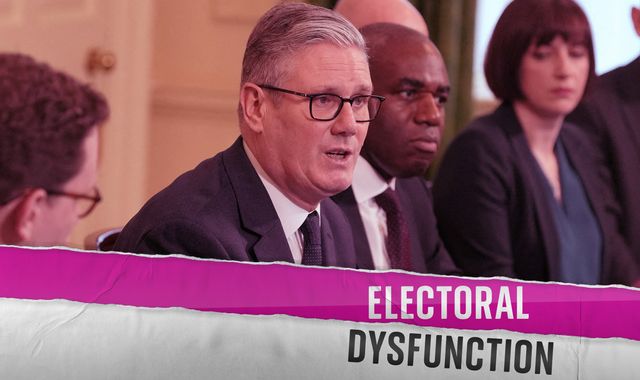
The prime minister is expected to set out how the budget, which saw £26bn of tax rises imposed across the economy, "moves forward the government's programme of national renewal", and set "the right economic course" for Britain, Downing Street says. He will also confirm that ministers will try again to reform the "broken" welfare system, after Labour MPs forced the government to U-turn on its plans to narrow the eligibility for Personal Independence Payments (PIP) earlier this year. 'Of course I didn't' lie about public finances, says Reeves "We have to confront the reality that our welfare state is trapping people, not just in poverty, but out of work - young people especially. And that is a poverty of ambition," Sir Keir will say. "And so while we will invest in apprenticeships and make sure every young person without a job has a guaranteed offer of training or work, we must also reform the welfare state itself - that is what renewal demands." The prime minister will add: "This is not about propping up a broken status quo. Nor is it because we want to look somehow politically 'tough'. The Tories played that game and the welfare bill went up by £88bn. They left children too poor to eat and young people too ill to work. A total failure." Instead, he will argue it is about "potential", saying: "If you are ignored that early in your career, if you're not given the support you need to overcome your mental health issues, or if you are simply written off because you're neurodivergent or disabled, then it can trap you in a cycle of worklessness and dependency for decades, which costs the country money, is bad for our productivity, but most importantly of all - costs the country opportunity and potential. "And any Labour Party worthy of the name cannot ignore that. That is why we have asked Alan Milburn on the whole issue of young people, inactivity and work. We need to remove the incentives which hold back the potential of our young people." The announcement will come after the Conservative opposition described the budget as one for "benefits street", following the chancellor's decision to lift the two-child benefit cap from April, at a cost of £3bn. 'Government must go further and faster on growth' The prime minister is also expected to launch a staunch defence of the budget overall, saying it will bear down on the cost of living through measures like money off energy bills and frozen rail fares; increase economic stability; and protect investment in public services and infrastructure that will drive economic growth. He will argue that "economic growth is beating the forecasts", but that the government must go "further and faster" to encourage it. He will also reiterate his vow to scrap regulation across the economy, which he will argue is not only pro-business, but also a way to deal with the cost of living. "Rooting out excessive costs in every corner of the economy is an essential step to lower the cost of living for good, as well as promoting more dynamic markets for business," the prime minister will say. He will confirm reforms to the building of nuclear power plants, after the government's nuclear regulatory taskforce found that "pointless gold-plating, unnecessary red-tape and well-intentioned, but fundamentally misguided environmental regulation had made Britain the most expensive place to build nuclear power". "We urgently need to correct this," the prime minister will say. Business secretary Peter Kyle will be tasked with applying the same deregulatory approach to major infrastructure schemes and to accelerate the implementation of Labour's industrial strategy. In response, Tory shadow chancellor Sir Mel Stride said: "It is frankly laughable to hear the prime minister say Rachel Reeves's Benefits Street budget has put the country on the right course and that he wants to fix the welfare system. "His chancellor has just hiked taxes by £26bn to pay for a welfare splurge, penalising people who work hard and making them pay for those who don't work at all. And she misrepresented why she was doing it, claiming there was a fiscal black hole to fill that she knew didn't exist. "Labour's leadership have repeatedly shown they lack the backbone to tackle welfare and instead are just acting to placate their left-wing backbenchers." Chancellor accused of 'lying' Sir Mel is referring to the chancellor's speech on 4 November in which she laid the ground for tax rises due to the decision by the independent Office for Budget Responsibility (OBR) to review and downgrade productivity over recent years, at a cost of £16bn, which led to a black hole in the public finances. But the OBR revealed on Friday that it had told the Treasury days earlier that there was actually a budget surplus of £4.2bn, leading to outrage and claims that she misled the country about the state of the public finances. Rachel Reeves was asked directly by Sky's Trevor Phillips if she lied, and she replied: "Of course I didn't." She said: "I said in that speech that I wanted to achieve three things in the budget - tackling the cost of living, which is why I took £150 off of energy bills and froze prescription charges and rail fares. "I wanted to continue to cut NHS waiting lists, which is why I protected NHS spending. And I wanted to bring the debt and the borrowing down, which is one of the reasons why I increased the headroom. "£4bn of headroom would not have been enough, and it would not give the Bank of England space to continue to cut interest rates." Ms Reeves also said: "In the context of a downgrade in our productivity, which cost £16bn, I needed to increase taxes, and I was honest and frank about that in the speech that I gave at the beginning of November." But Tory leader Kemi Badenoch said: "I think the chancellor has been doing a terrible job. She's made a mess of the economy, and [...] she has told lies. This is a woman who, in my view, should be resigning." Report due on OBR breach The tumultuous run-up to the 26 November budget culminated in the OBR accidentally publishing its assessment of the chancellor's measures 45 minutes before the speech began, in what was an unprecedented breach of budget security. 👉 Listen to Sky News Daily on your podcast app 👈 The chair of the OBR, Richard Hughes, apologised for the "error", and announced an investigation into how it happened. The chancellor has said that she retains confidence in him, despite the "serious breach of protocol", and confirmed to Trevor that the investigation report will be delivered to her on Monday, although it is not clear when it will be published.

Template for national news
No Writer
Nov 30
Moises Caicedo let Declan Rice comparisons affect him, says Jamie Carragher after Chelsea midfielder's dimissal against Arsenal

Caicedo was shown the first red card of his Chelsea career in the Stamford Bridge showdown for a dangerous challenge on Mikel Merino during the 1-1 draw. Speaking on Super Sunday: Extra Time, Carragher said the noise around the game may have affected 24 year-old Caicedo, who appeared particularly energetic before his dismissal and was lucky not to receive an earlier booking for a shoulder charge on Jurrien Timber. "He was really pumped up, I think we saw that right from the start of the game," Carragher said. "I think the whole talk this week of Rice vs Caicedo maybe got to him, understandably so. "It's a huge game, and he ends up getting himself involved in a challenge. Yes, it's a red card, but it's just daft to get involved in a tackle like that. He doesn't need to. Chelsea 1-1 Arsenal - Match report and highlightsLive Premier League table | Watch PL highlights for freeGot Sky? Watch PL games LIVE on your phone📱No Sky? Get Sky Sports or stream with no contract on NOW📺 "He's a brilliant player. He wins the ball back fantastically well, but I think he does have a tendency where he can look clumsy with some of the angles he can come in with, and I'm quite surprised that this is only his first red card. "I remember a challenge in the Carabao Cup final against [Ryan] Gravenberch a couple of years ago as well. It's not because he's a nasty player but that was a case in point really, where he ends up facing his own goal to win a challenge, where basically he's got someone else coming behind him, and he just doesn't need to get involved. "He's just got to be careful with that. He's a fantastic player, but he definitely needs to learn from that. I'm sure the manager will speak to him if he's come out and said it was a definite red card, and that's really good to hear." Merino: Caicedo tackle was a horrible challenge Arsenal midfielder Merino felt the full force of Caicedo's challenge - and the Spaniard said he immediately knew it was a sending off. Referee Anthony Taylor initially gave Caicedo a booking but was sent to the VAR monitor to check the challenge, before upgrading it to a red card due to "excessive force". "I felt my ankle go all the way," said Merino to Sky Sports. "But luckily, I have very mobile ankles and body so I wasn't concerned about myself. "But I knew it was a horrible challenge and a red card straight away." Arsenal manager Mikel Arteta added: "It was really fast in the beginning. I saw the reaction and everybody was saying 'he's off'. "Anthony [Taylor, the referee] made a call and I think it's the right one." Maresca questions consistency - and says Hincapie should have also seen red Chelsea boss Maresca felt Piero Hincapie should have joined Caicedo in being sent off for a second-half elbow on goalscorer Trevoh Chalobah. Chelsea captain Reece James said in his interview to Sky Sports that he felt there "should have been another red" for Arsenal and Maresca revealed he asked Anthony Taylor's decision why he kept Hincapie on the pitch. Sky Sports commentators said during the match that VAR officials deemed the decision to not send the Arsenal defender off correct as Hincapie's eyes were on the ball. "I think Reece is right, but they decide," said Maresca in his post-match press conference. "I asked the referee, he said to me that it was not an elbow. This is what they said. "He has a black eye here, like this. It was with ice at half-time. But they judge in different way." Maresca also took issue with the consistency around Caicedo's red card - claiming it was identical to Rodrigo Bentacur's challenge for Spurs in their defeat to Chelsea at the start of November. Bentancur avoided a red card after VAR checked the challenge. The Italian agreed that Caicedo should have been sent off, but did not like the lack of consistency in the Premier League. "It's a red card," said Maresca about the Caicedo challenge. "But why Bentancur against Reece was not red card when we played Spurs away? "So as managers, we struggle to understand why they judge in a different way. "Moi is a red card, yes. Bentancur is red card, yes. Why don't they give them [both] red cards? It's just that we struggle to understand. "The reality is that it's red card. But why they judge in different way?" Watch Dermot Gallagher analyse the Piero Hincapie and Moises Caicedo incidents on Sky Sports News' Ref Watch on Monday morning at 9am

bottom of page